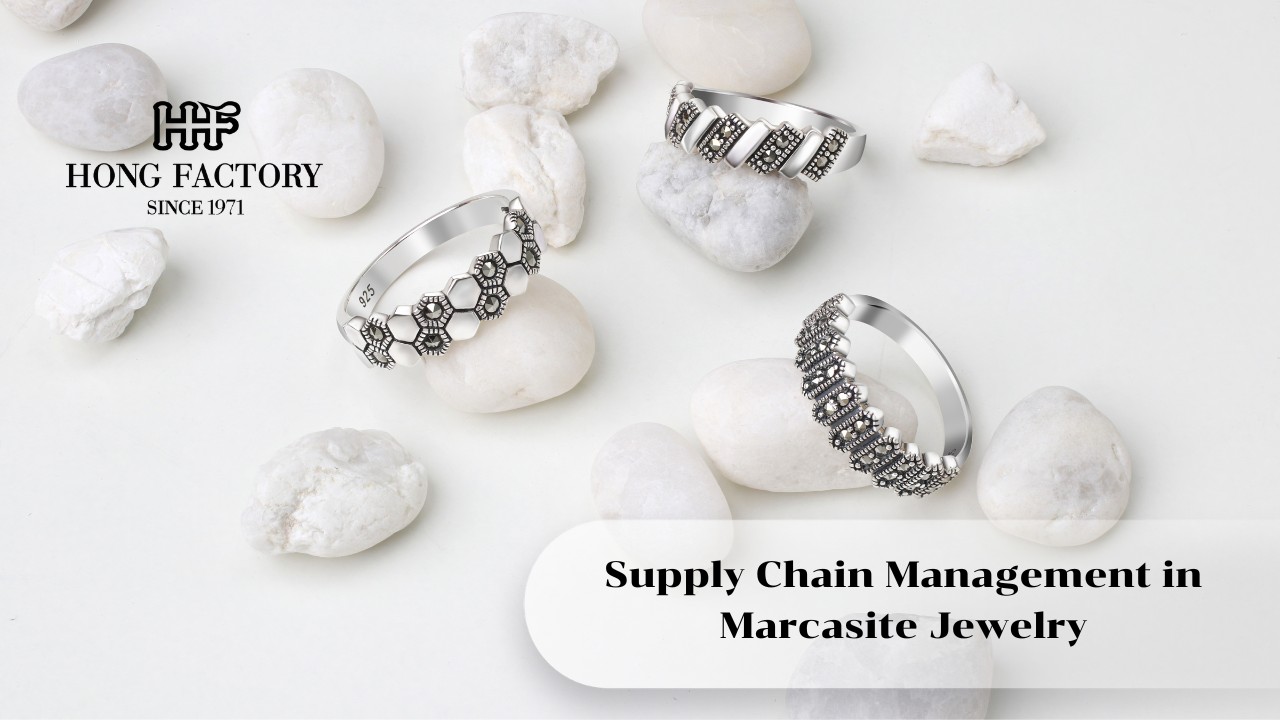
Effective supply chain management is essential in the marcasite jewelry industry, where craftsmanship, material quality, and timing must align perfectly. Because marcasite jewelry production depends on skilled labor, sterling silver sourcing, and precise stone handling, any disruption in the supply chain can impact quality, cost, and delivery reliability. Strong supply chain management ensures consistency while supporting ethical and sustainable practices. Marcasite jewelry
This article explores supply chain management in marcasite jewelry, covering sourcing, production flow, logistics, risk management, and strategies for long-term resilience.
Why Supply Chain Management Matters in Marcasite Jewelry

The marcasite jewelry supply chain is complex.
Unique Industry Characteristics
- Labor-intensive hand-setting processes
- Dependence on sterling silver market stability
- Requirement for consistent stone quality
- Sensitivity to delivery timelines
Efficient supply chains protect margins and brand reputation.
Key Components of the Marcasite Jewelry Supply Chain
Understanding each stage improves coordination.
Core Supply Chain Stages
- Raw material sourcing
- Stone preparation and sorting
- Jewelry manufacturing
- Quality control and finishing
- Packaging and distribution
Each stage must align seamlessly to maintain quality.
Sourcing Sterling Silver Responsibly
Silver is the foundation material.
Silver Supply Considerations
- Reliable bullion suppliers
- Consistent purity standards (925)
- Price volatility management
Long-term supplier relationships reduce risk and price fluctuations.
Managing Marcasite (Pyrite) Stone Supply
Stone consistency is critical.
Stone Supply Best Practices
- Work with specialized stone suppliers
- Standardize stone sizes
- Pre-sort stones before production
Consistent stone quality reduces waste and rework.
Supplier Relationship Management
Strong partnerships stabilize the supply chain.
Benefits of Long-Term Supplier Relationships
- Priority access to materials
- Better pricing stability
- Reliable delivery schedules
Trust-based partnerships reduce operational risk.
Production Planning and Workflow Coordination
Planning keeps production efficient.
Coordinating Production Stages
- Align material delivery with production schedules
- Balance artisan workload
- Avoid bottlenecks in stone setting
Proper planning improves throughput without compromising craftsmanship.
Inventory Management Strategies
Inventory ties up capital.
Inventory Best Practices
- Maintain safety stock for critical materials
- Avoid overstocking slow-moving designs
- Track turnover rates closely
Lean inventory improves cash flow and reduces storage costs.
Quality Control Integration in the Supply Chain
Quality is not a final step.
Integrated Quality Control
- Inspect materials upon arrival
- Monitor quality during production
- Conduct final inspections before shipping
Early detection prevents costly downstream issues.
Logistics and Transportation Considerations
Logistics affect delivery reliability.
Jewelry-Specific Logistics Needs
- Secure packaging
- Climate-controlled transport when necessary
- Insurance coverage for valuable shipments
Reliable logistics protect goods and customer trust.
Managing Lead Times and Delivery Schedules
Consistency matters to buyers.
Lead Time Management
- Set realistic production timelines
- Communicate clearly with buyers
- Build buffers for complex designs
Accurate lead times improve customer satisfaction.
Risk Management in the Marcasite Jewelry Supply Chain
Risk is unavoidable but manageable.
Common Supply Chain Risks
- Silver price spikes
- Supplier disruptions
- Labor shortages
- Transportation delays
Preparedness minimizes impact.
Building Supply Chain Resilience
Resilience ensures continuity.
Resilience Strategies
- Diversify critical suppliers
- Cross-train artisans
- Maintain emergency material reserves
Flexible systems adapt better to disruptions.
Technology in Supply Chain Management
Technology enhances visibility.
Useful Tools
- Inventory management software
- Production tracking systems
- Supplier performance monitoring
Technology supports data-driven decisions.
Ethical and Sustainable Supply Chain Practices
Modern markets demand responsibility.
Ethical Supply Chain Principles
- Fair labor practices
- Responsible material sourcing
- Environmental awareness
Ethical supply chains strengthen brand credibility.
Communication Across the Supply Chain

Clear communication prevents errors.
Communication Best Practices
- Regular supplier updates
- Clear specifications and standards
- Transparent issue reporting
Alignment reduces misunderstandings.
Cost Control Through Supply Chain Optimization
Efficiency protects margins.
Cost Control Opportunities
- Reduced rework through better sourcing
- Lower transportation waste
- Improved production scheduling
Optimization balances cost and quality.
Scaling the Supply Chain for Growth
Growth requires preparation.
Scaling Considerations
- Increased material demand
- Expanded artisan capacity
- Enhanced logistics infrastructure
Scalable systems support sustainable expansion.
Measuring Supply Chain Performance
Metrics drive improvement.
Key Performance Indicators
- On-time delivery rate
- Defect and return rates
- Inventory turnover
- Supplier reliability
Regular monitoring enables continuous improvement.
Long-Term Supply Chain Strategy
Strategy ensures longevity.
Strategic Focus Areas
- Stability over short-term savings
- Partnership-driven sourcing
- Continuous process improvement
Strong strategy supports long-term success.
Conclusion
Supply chain management in marcasite jewelry is a delicate balance between efficiency, craftsmanship, and reliability. By building strong supplier relationships, integrating quality control, managing inventory wisely, and planning for risk, brands can maintain consistent quality while controlling costs. A resilient and ethical supply chain not only supports profitability but also reinforces the craftsmanship and trust that define high-quality marcasite jewelry.